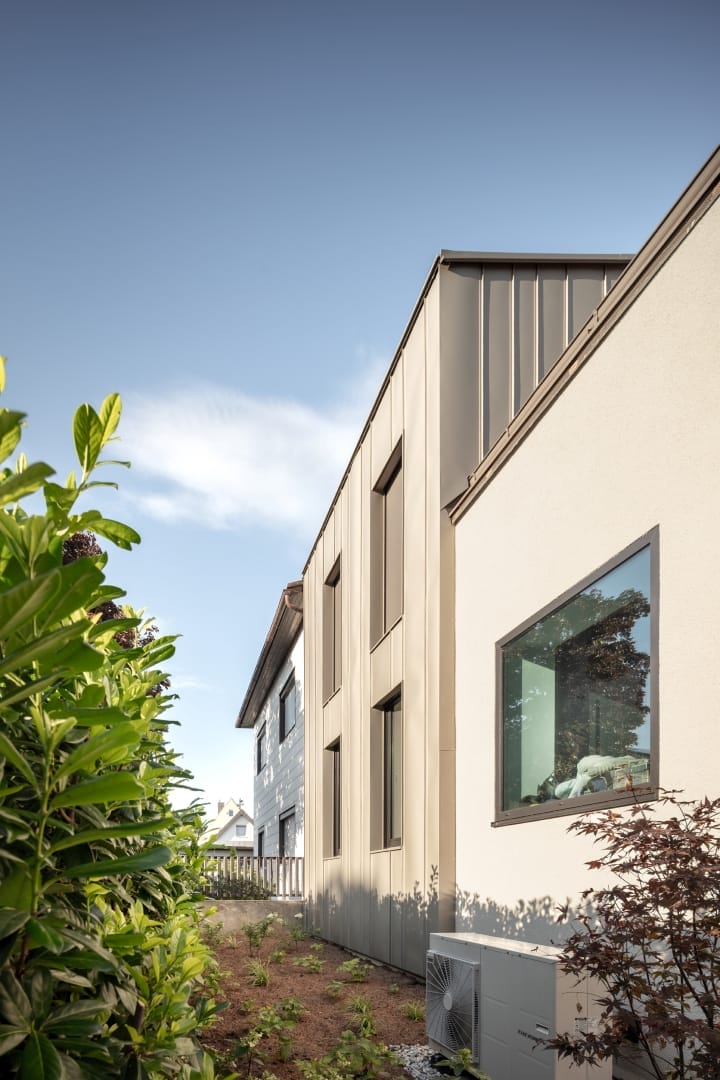
On the outskirts of Vienna, a modest wartime house has been carefully renewed and expanded. Typical of its era, the existing building featured a raised ground floor, street-facing living spaces, a partial basement, and a rear entrance. While lovingly maintained over decades, its garden side was long dominated by the massive, neglected fire wall of the neighboring property—a gray, oppressive presence that shaped the outdoor atmosphere.
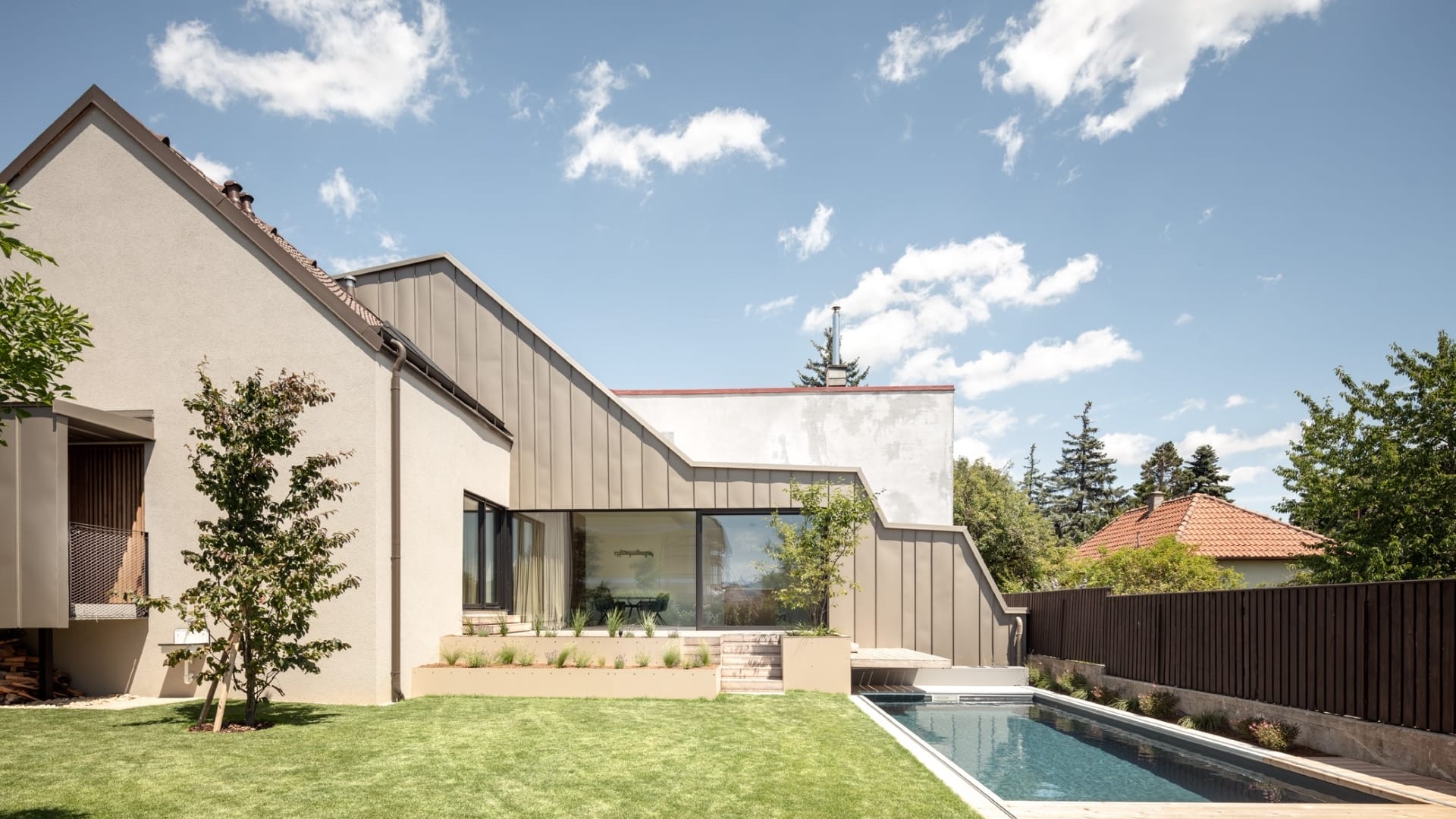
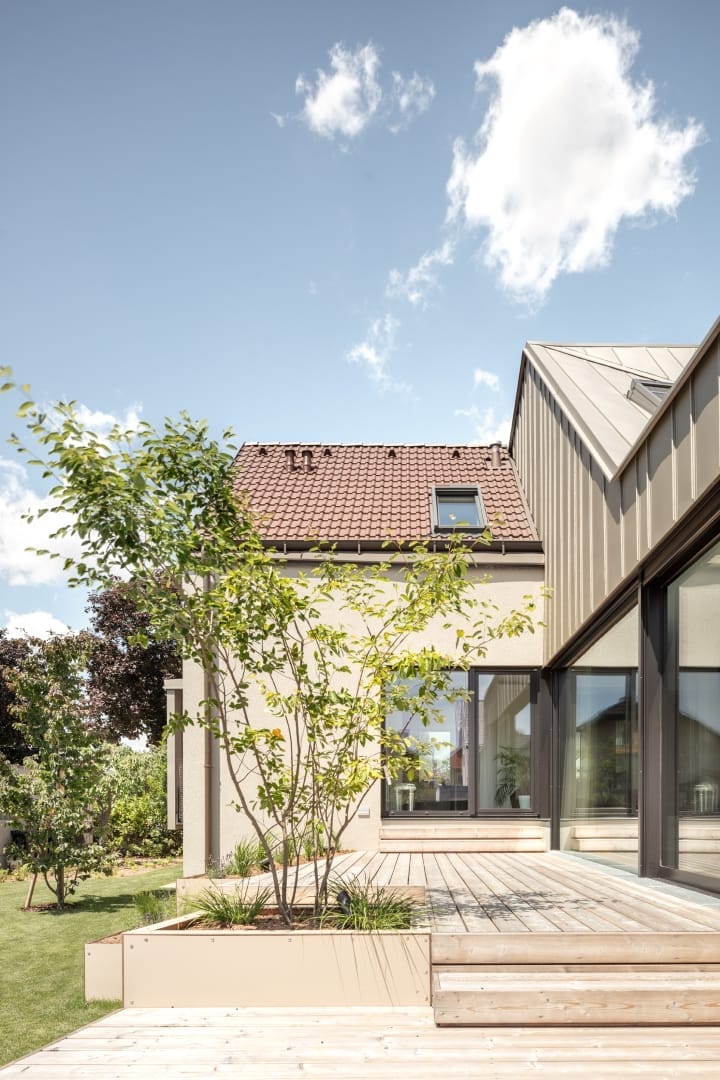
The design approach focused not on replacement but on sensitive transformation. A new extension, built directly against the fire wall, became the key architectural gesture: concealing much of its scale, stepping down towards the garden, and carving out a sheltered, private outdoor realm. This cascading form mediates between the existing house and the lowered garden, establishing a fluid spatial dialogue between old and new.
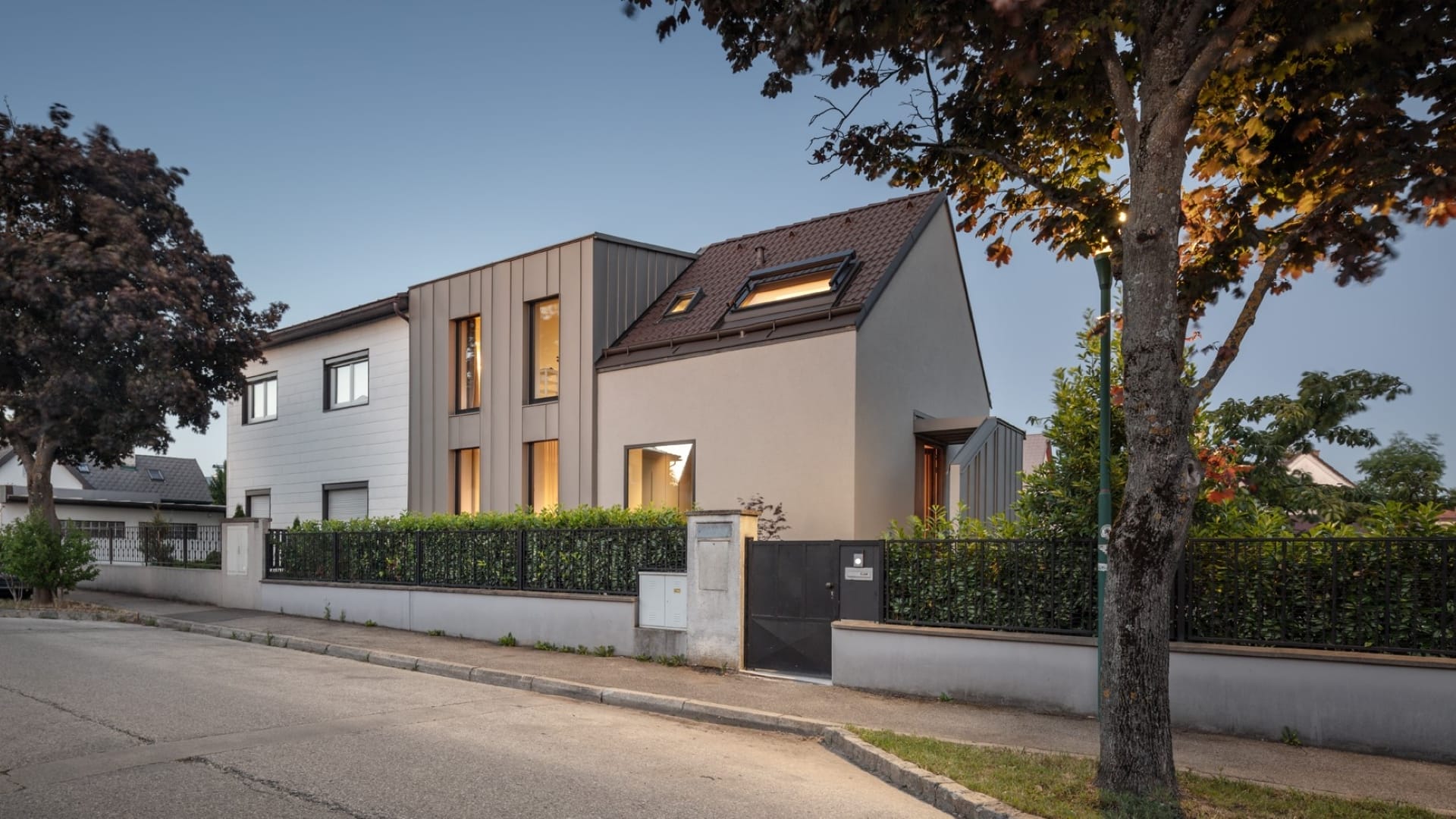
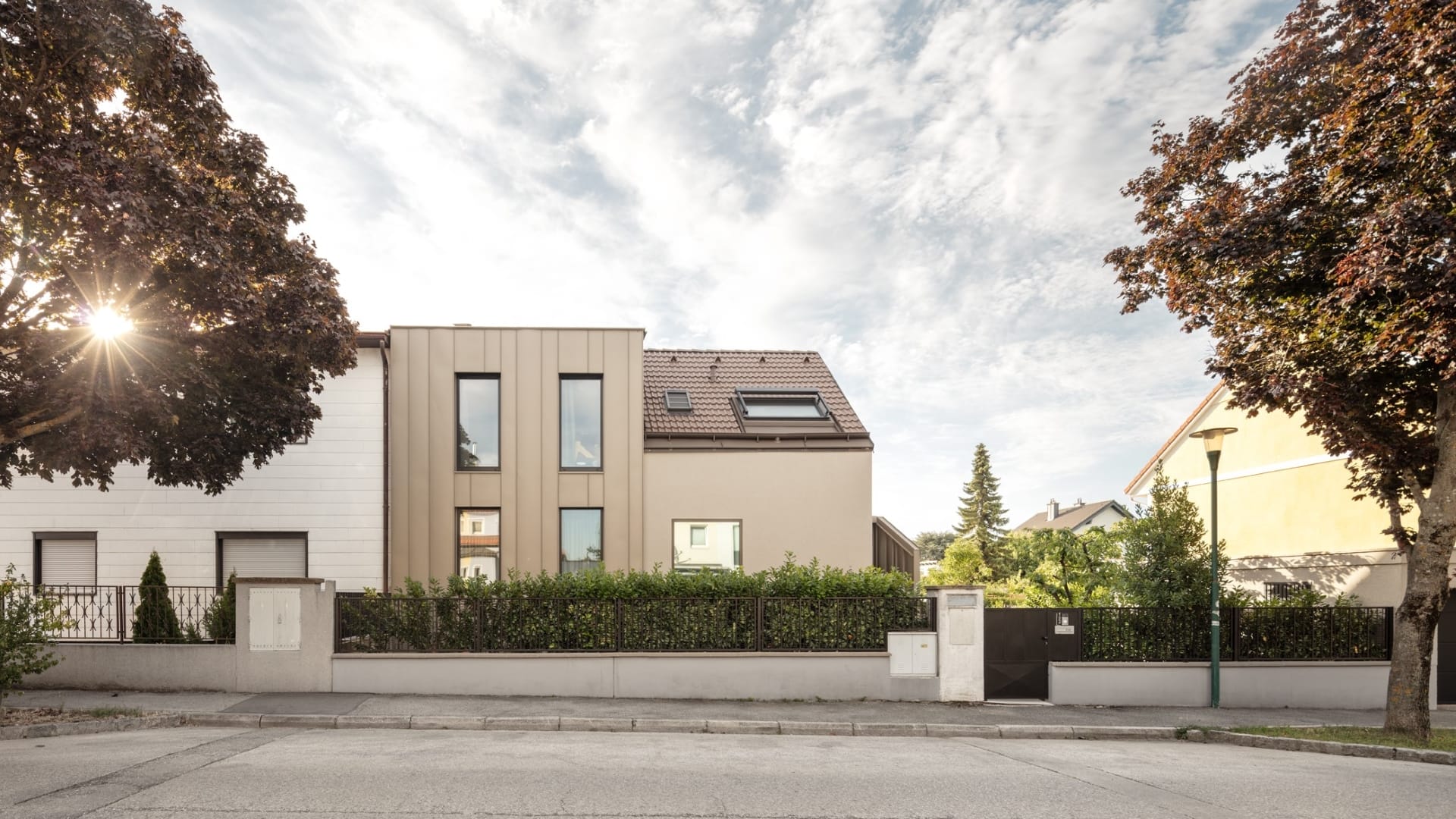
The renovated structure preserves the narrative of the original house, while the new volumes assert a contemporary architectural language. The interplay creates a dynamic tension—precise in detail, yet harmonious within the loose fabric of the surrounding single-family homes.
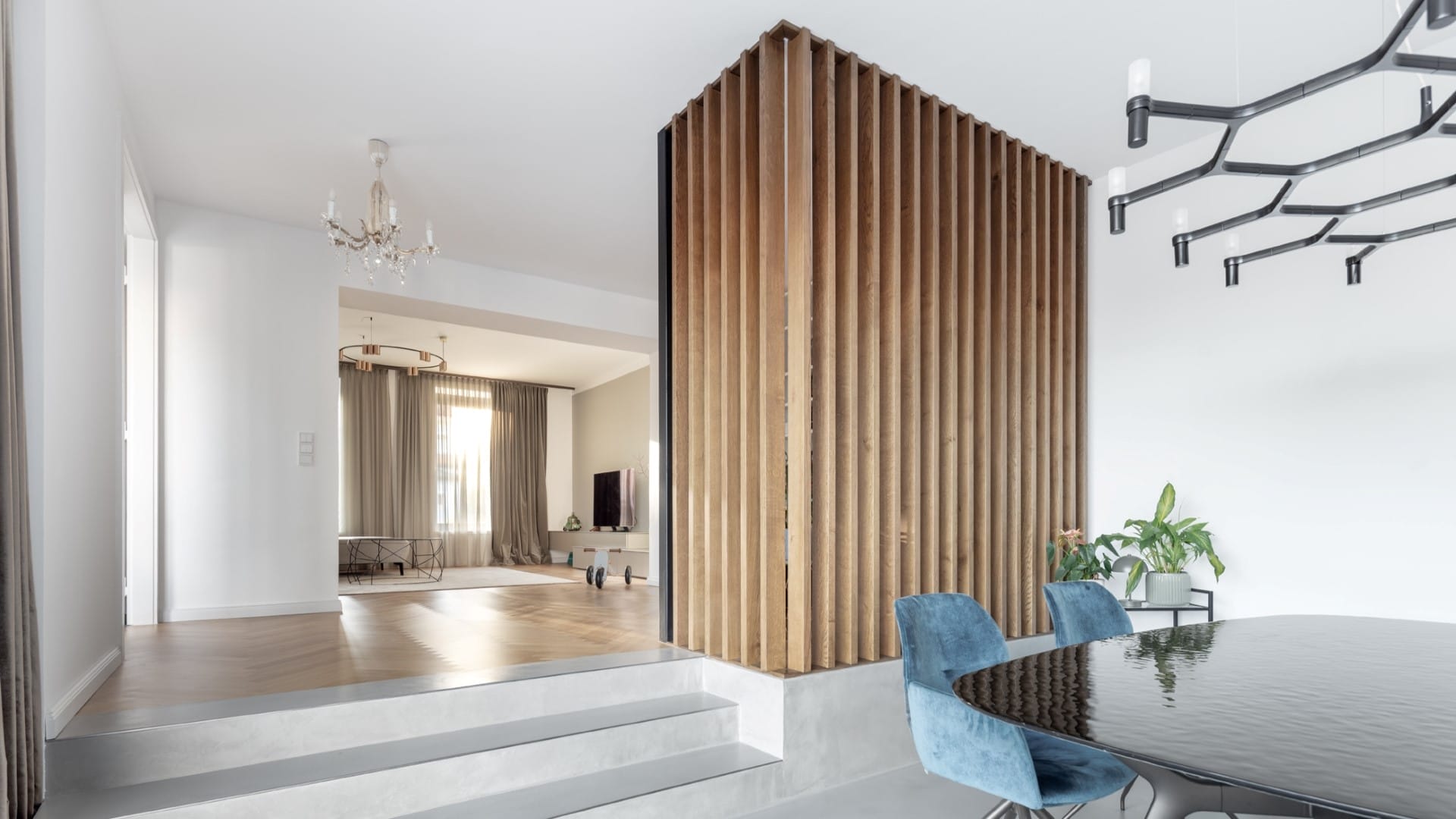
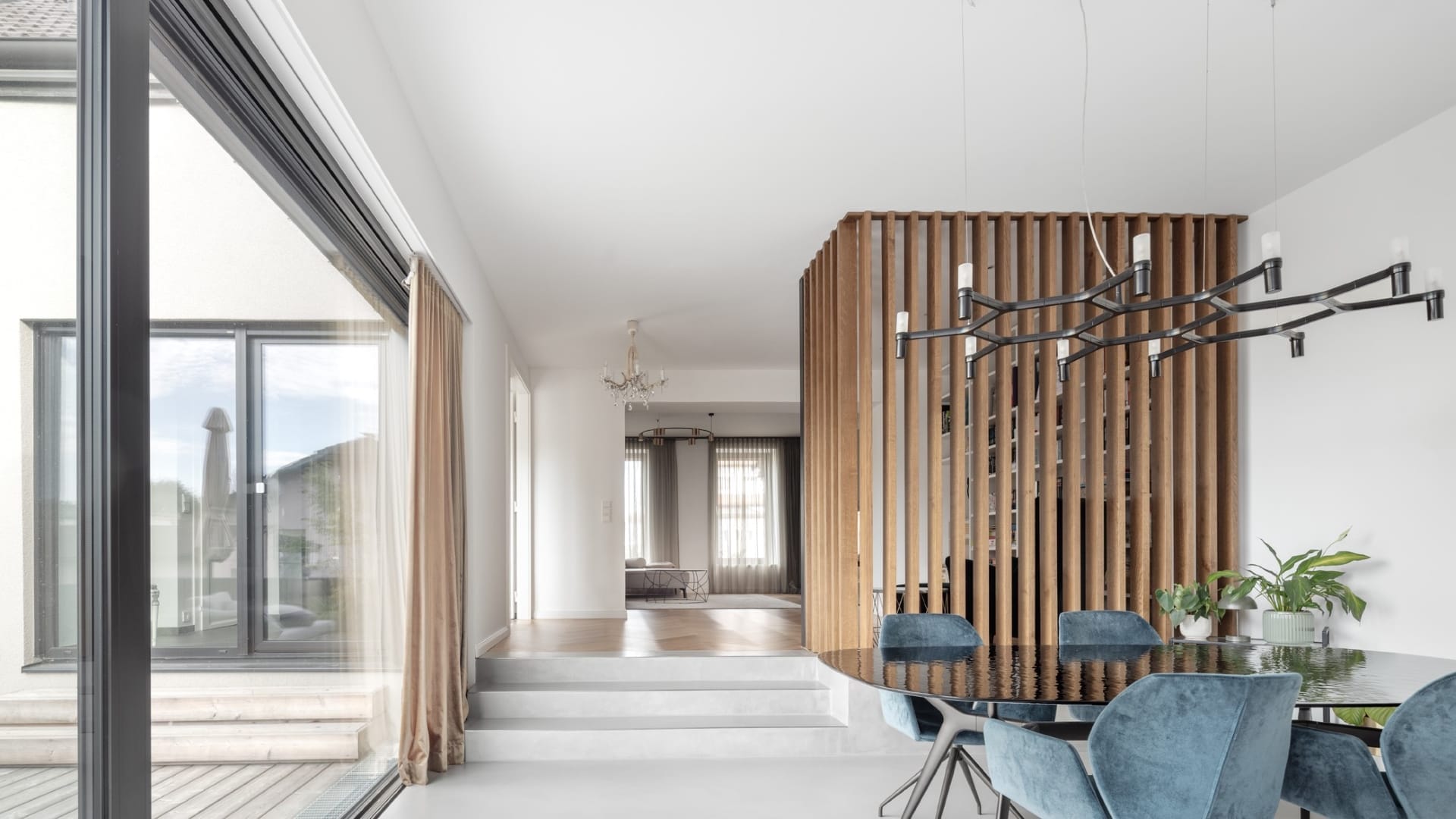
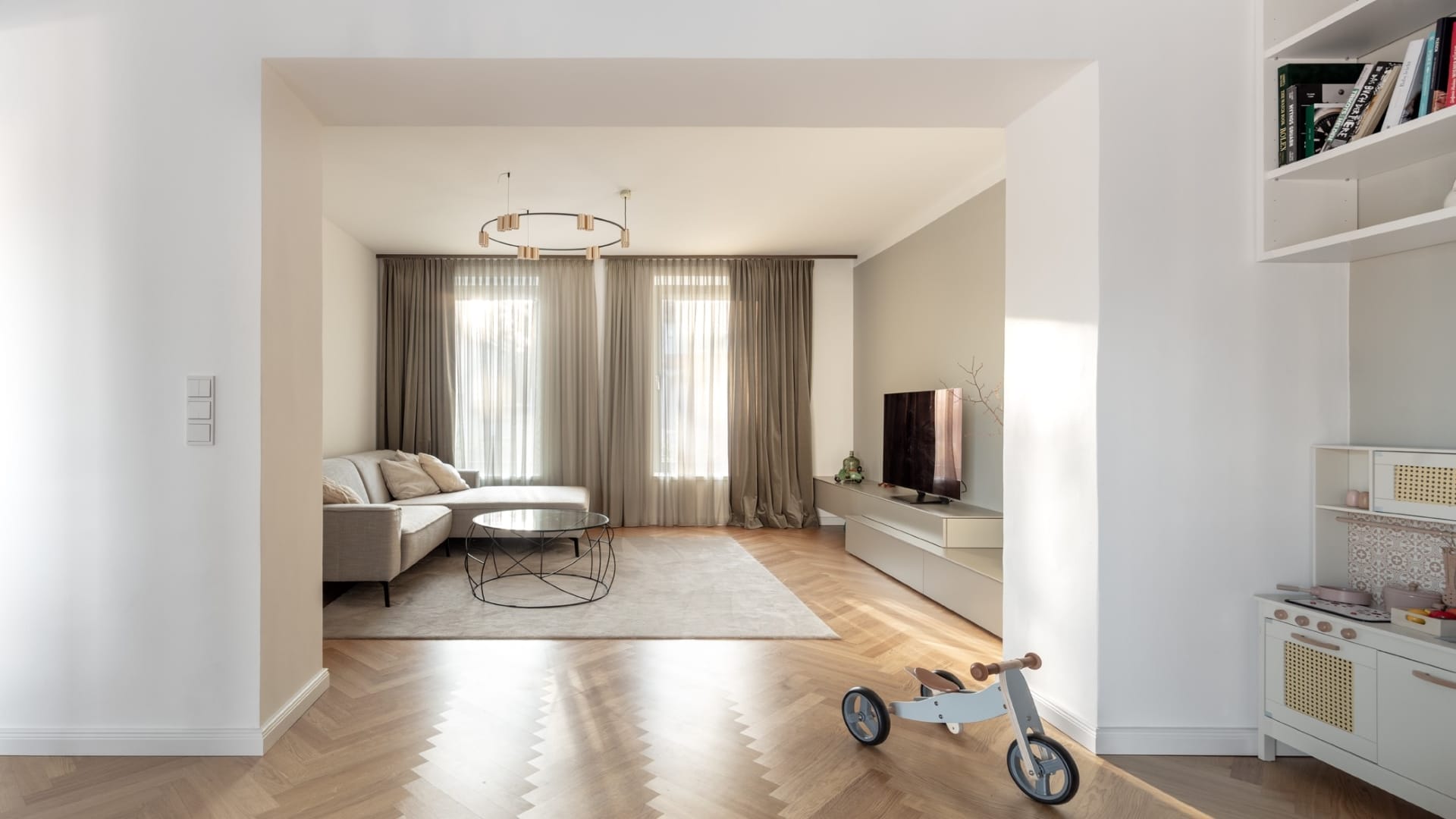
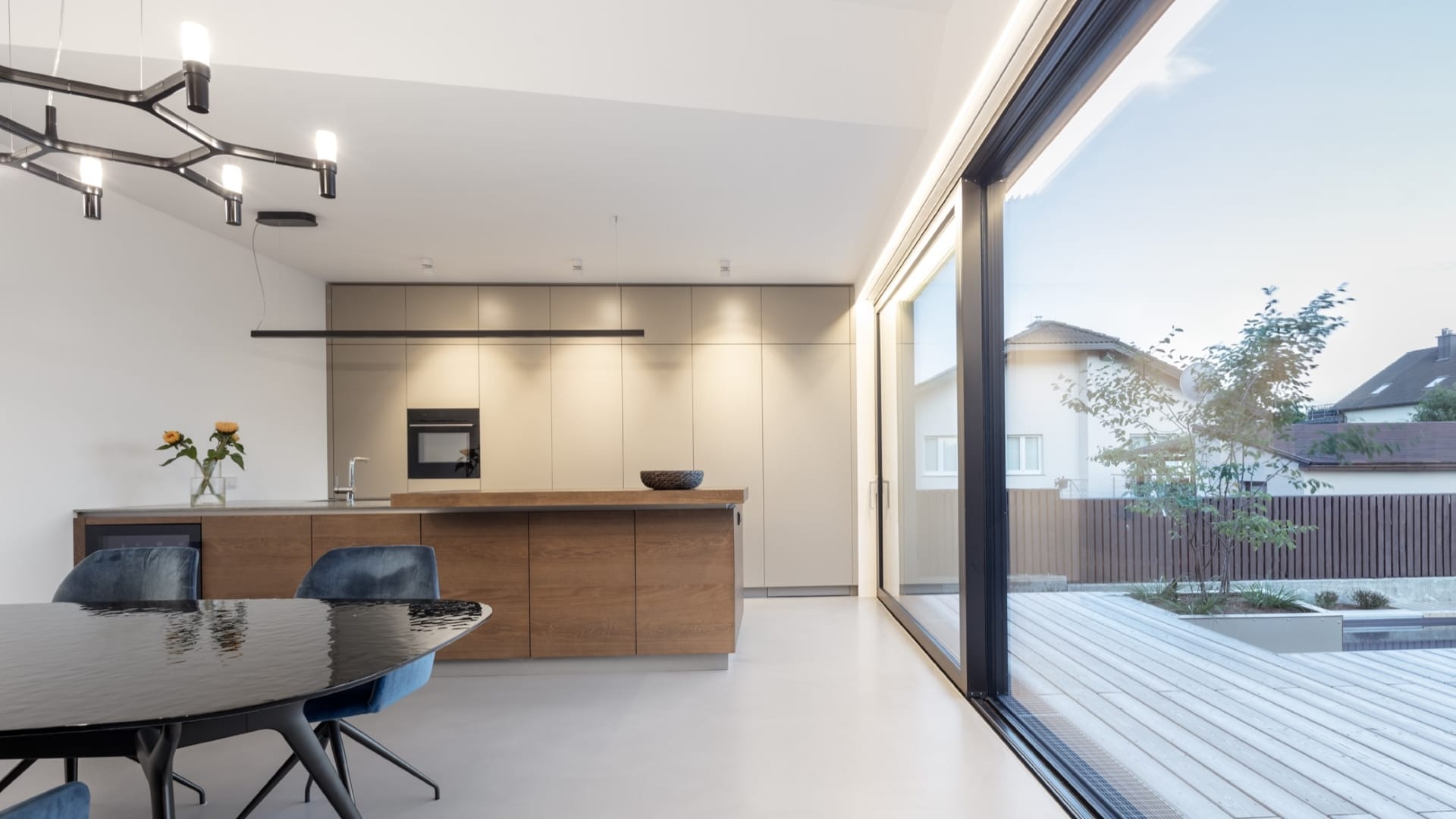
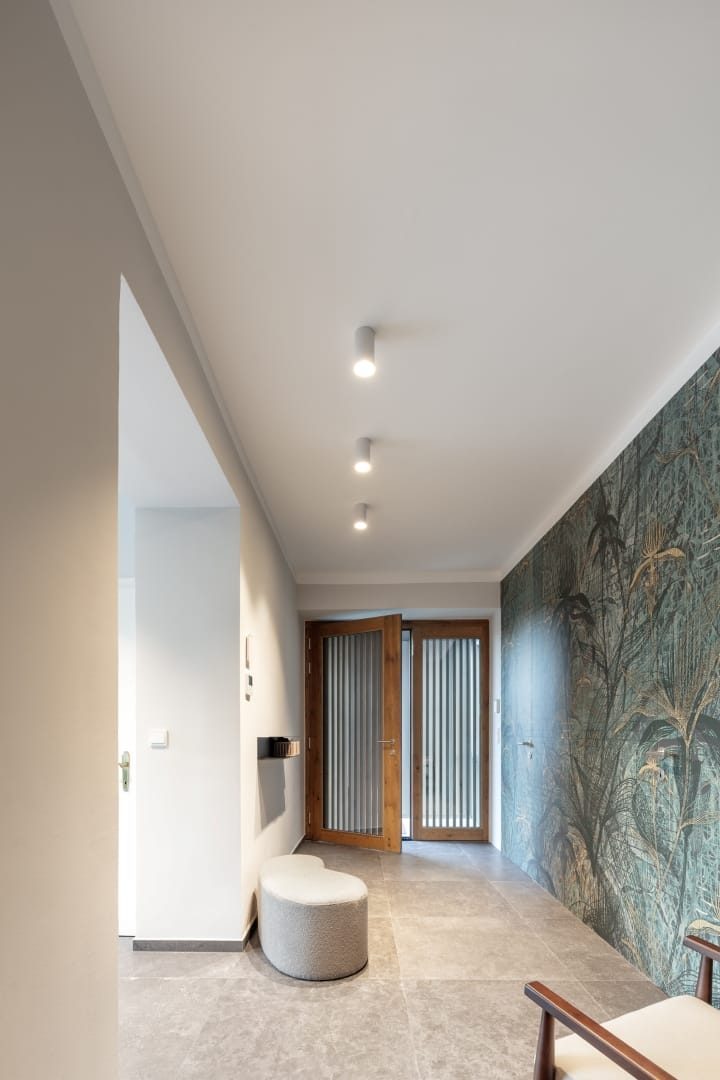
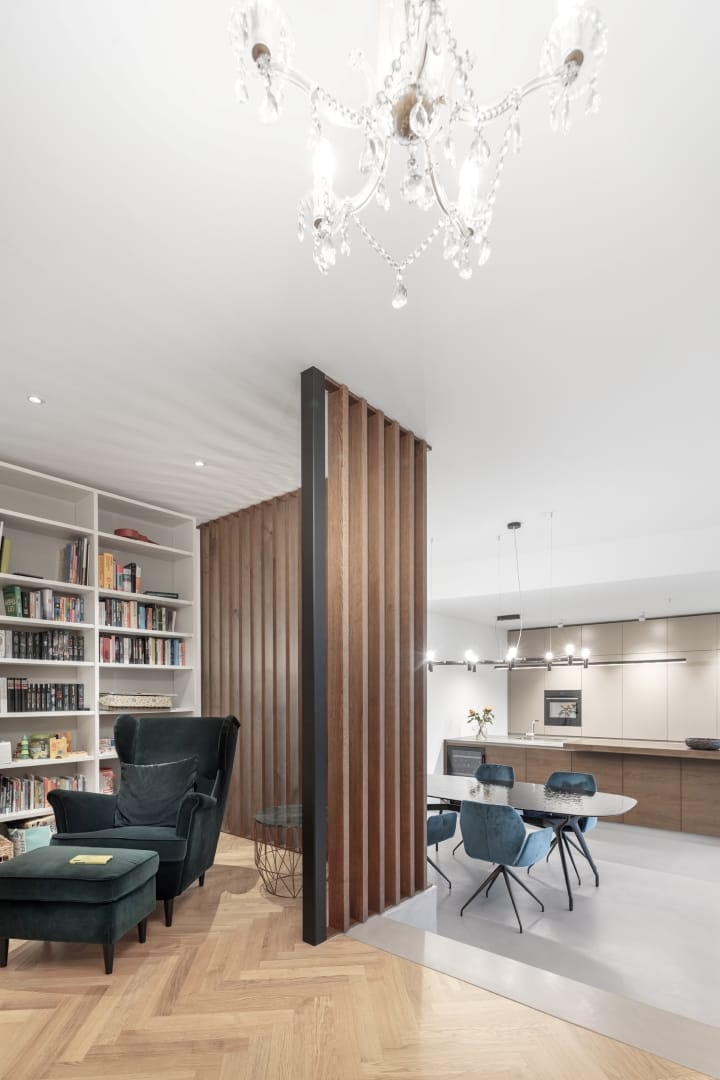
Materiality and construction reflect a commitment to sustainability and adaptability. The extension was designed as a demountable aluminum system—fully reversible and recyclable. Timber defines both structure and interior: Austrian oak in varied finishes lends warmth and tactility. Prefabricated timber elements with cellulose insulation enabled a construction period of just eleven months. Access was redefined through a new side entrance from the street, establishing a clear separation between public and private zones. Inside, the living spaces unfold in split levels, opening fully to the garden. A projecting terrace extends the living area outdoors, with broad steps leading gently into the greenery. While the street façade remains deliberately closed, the garden façade opens generously—embracing light, views, and the surrounding nature.
The energy concept integrates passive and active strategies: the closed south-facing façade of the existing house, optimized orientation of the extension, high-performance insulation, external shading, and retractable sun sails. Heating and cooling are provided by an air-source heat pump through underfloor systems and activated building components. A photovoltaic array covers the household’s electricity needs, including e-mobility. LED lighting and the complete avoidance of fossil fuels complete the sustainable vision.
This project demonstrates how careful continuation can preserve architectural heritage while shaping a future-oriented living environment—combining clarity of design, precision of function, and a consistent commitment to sustainability.